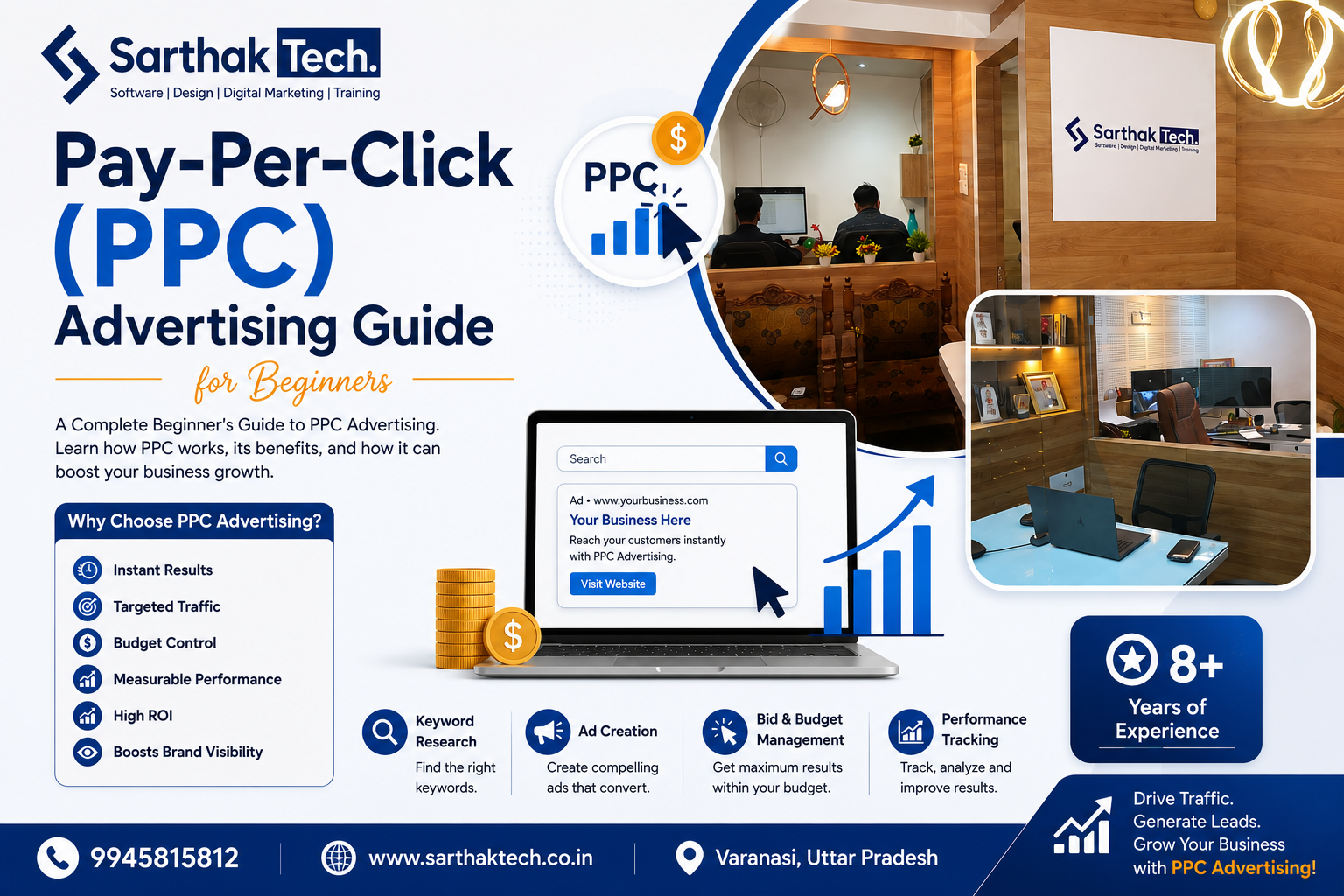
Pay-Per-Click (PPC) advertising is one of the fastest ways to drive targeted traffic to your website. Unlike Search Engine Optimization (SEO), which can take time to deliver results, PPC allows businesses to appear at the top of search engine results almost immediately by paying for clicks on their ads.
Whether you’re a small business owner, entrepreneur, or digital marketing beginner, understanding PPC can help you generate leads, increase sales, and grow your business efficiently.
What Is Pay-Per-Click (PPC) Advertising?
Pay-Per-Click (PPC) is an online advertising model where advertisers pay a fee each time someone clicks on their ad. Instead of earning traffic organically, businesses buy visits to their website through paid advertisements.
PPC ads appear on:
- Search engines (Google, Bing)
- Social media platforms
- Shopping websites
- YouTube
- Display advertising networks
Why Is PPC Important?
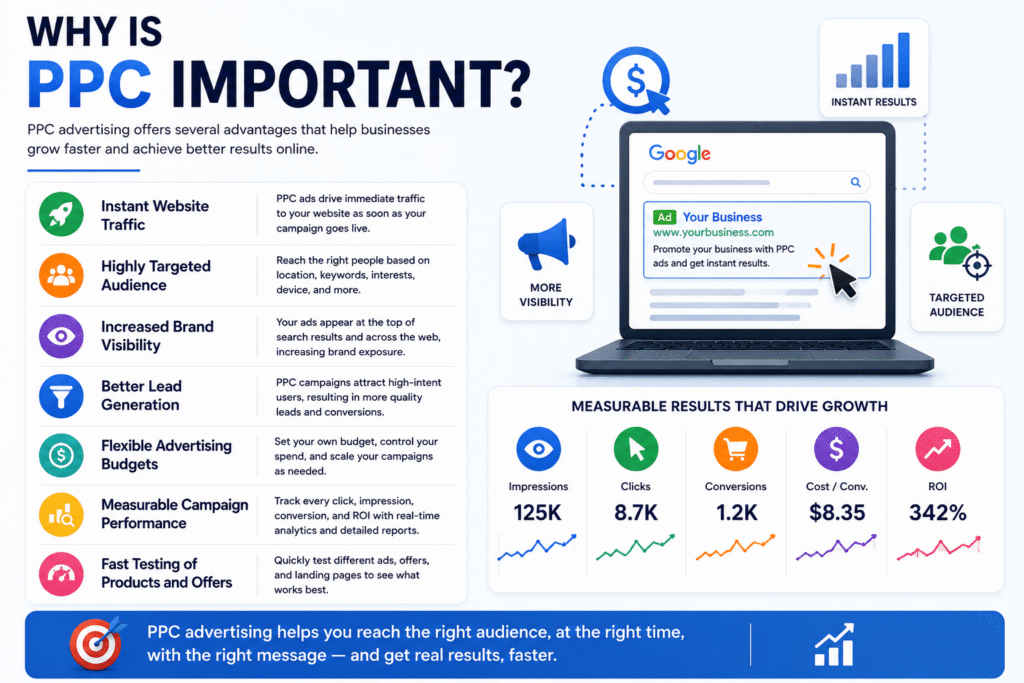
PPC advertising offers several advantages:
- Instant website traffic
- Highly targeted audience
- Increased brand visibility
- Better lead generation
- Flexible advertising budgets
- Measurable campaign performance
- Fast testing of products and offers
It is especially useful for businesses that want quick results while building long-term organic visibility through SEO.
How Does PPC Work?
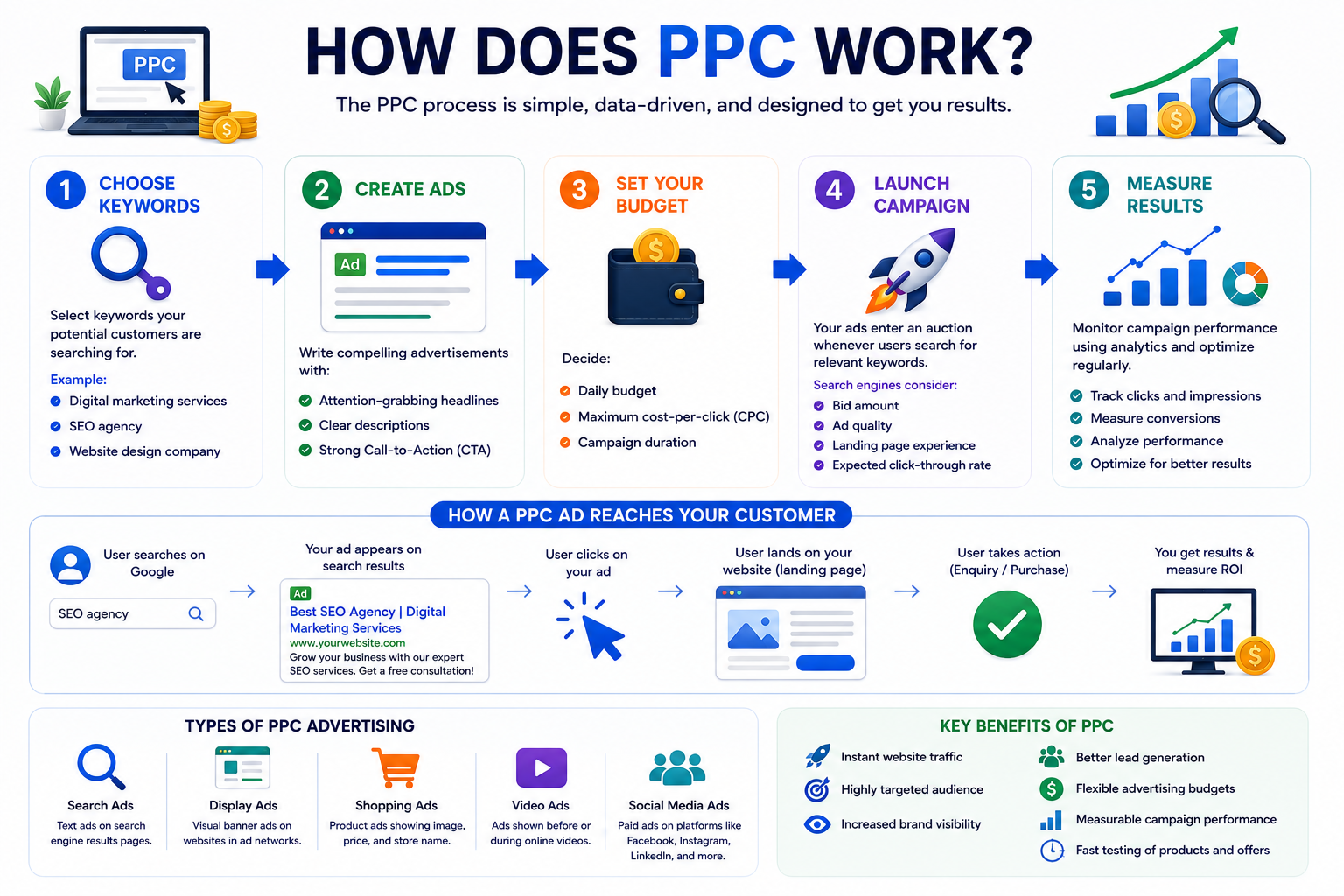
The PPC process is simple:
Step 1: Choose Keywords
Select keywords your potential customers are searching for.
Example:
- Digital marketing services
- SEO agency
- Website design company
Step 2: Create Ads
Write compelling advertisements with:
- Attention-grabbing headlines
- Clear descriptions
- Strong Call-to-Action (CTA)
Step 3: Set Your Budget
Decide:
- Daily budget
- Maximum cost-per-click (CPC)
- Campaign duration
Step 4: Launch Campaign
Your ads enter an auction whenever users search for relevant keywords.
Search engines consider:
- Bid amount
- Ad quality
- Landing page experience
- Expected click-through rate
Step 5: Measure Results
Monitor campaign performance using analytics and optimize regularly.
Types of PPC Advertising
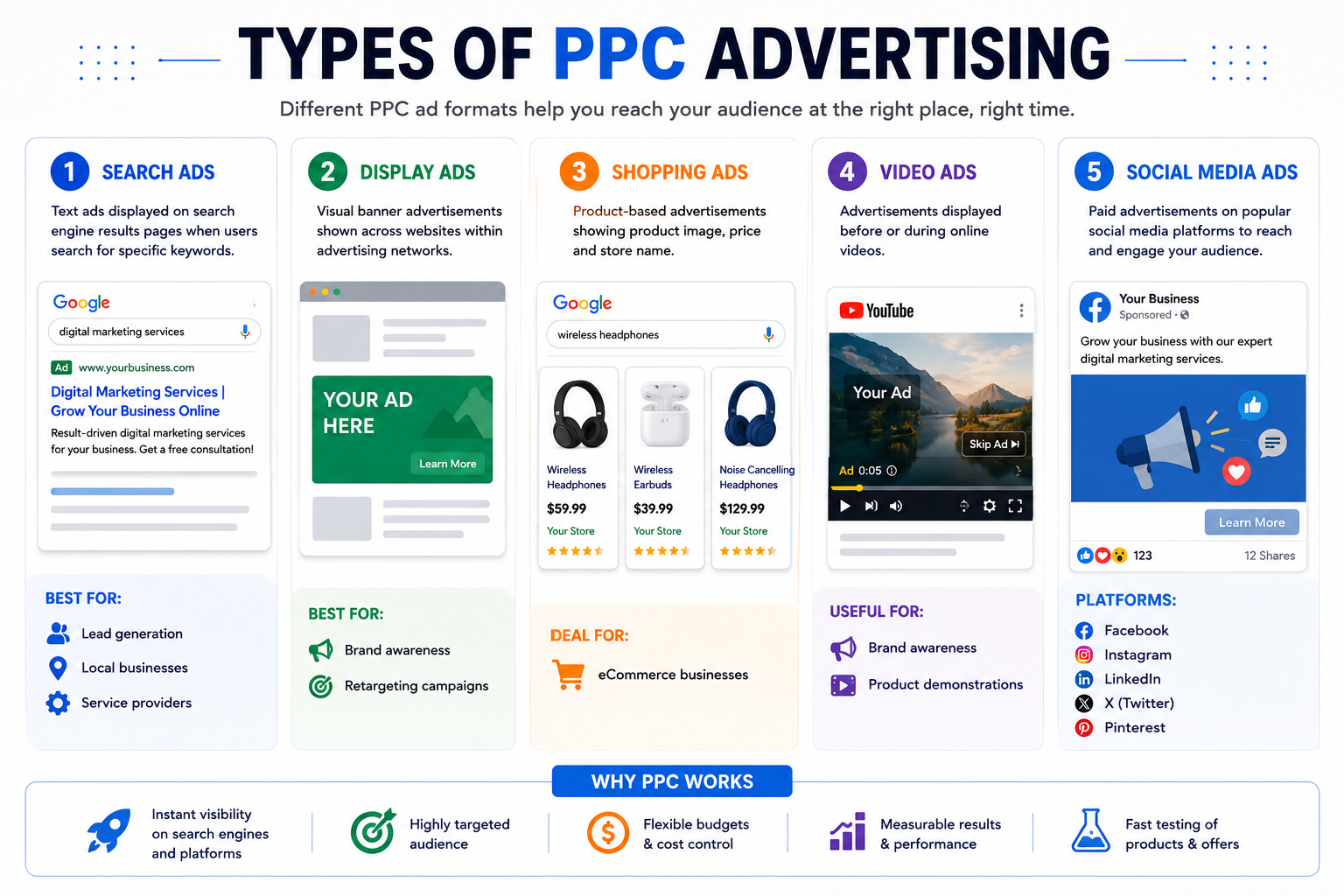
1. Search Ads
Text ads displayed on search engine results pages when users search for specific keywords.
Best for:
- Lead generation
- Local businesses
- Service providers
2. Display Ads
Visual banner advertisements shown across websites within advertising networks.
Best for:
- Brand awareness
- Retargeting campaigns
3. Shopping Ads
Product-based advertisements showing:
- Product image
- Price
- Store name
Ideal for eCommerce businesses.
4. Video Ads
Advertisements displayed before or during online videos.
Useful for:
- Brand awareness
- Product demonstrations
5. Social Media Ads
Paid advertisements on platforms like:
- X (Twitter)
These campaigns allow highly detailed audience targeting.
Benefits of PPC Advertising
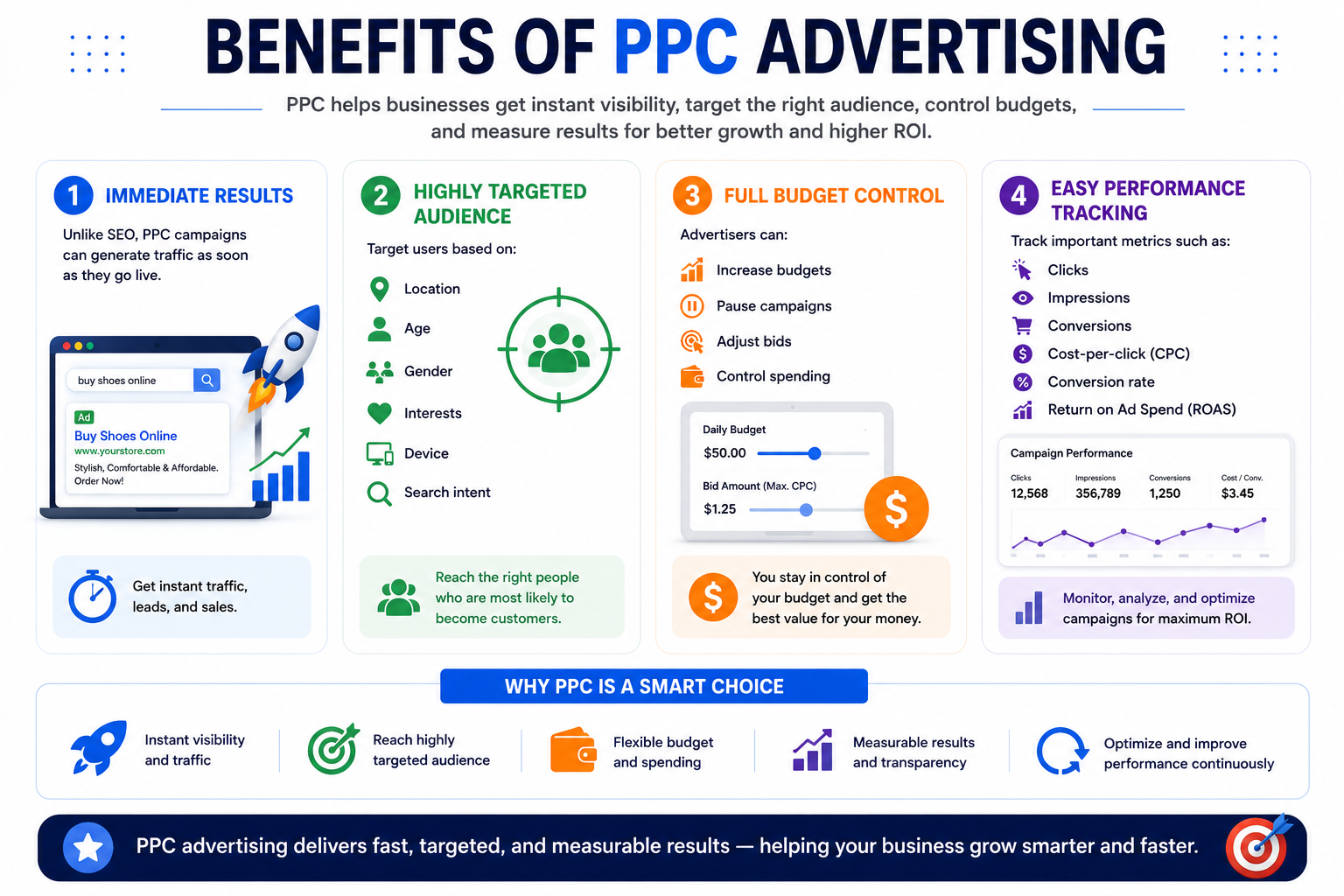
Immediate Results
Unlike SEO, PPC campaigns can generate traffic as soon as they go live.
Highly Targeted Audience
Target users based on:
- Location
- Age
- Gender
- Interests
- Device
- Search intent
Full Budget Control
Advertisers can:
- Increase budgets
- Pause campaigns
- Adjust bids
- Control spending
Easy Performance Tracking
Track important metrics such as:
- Clicks
- Impressions
- Conversions
- Cost-per-click (CPC)
- Conversion rate
- Return on Ad Spend (ROAS)
Best PPC Platforms
Popular advertising platforms include:
- Google Ads
- Microsoft Advertising (Bing Ads)
- Meta Ads (Facebook & Instagram)
- LinkedIn Ads
- Pinterest Ads
- YouTube Ads
Choose platforms based on where your target audience spends time.
PPC Best Practices
To improve campaign performance:
- Conduct thorough keyword research
- Write compelling ad copy
- Use relevant landing pages
- Optimize for mobile devices
- Include strong calls-to-action
- Add ad extensions when available
- Test multiple ad variations
- Monitor campaigns regularly
- Pause low-performing keywords
Common PPC Mistakes
Avoid these common mistakes:
- Targeting broad keywords only
- Ignoring negative keywords
- Sending traffic to poor landing pages
- Not tracking conversions
- Setting unrealistic budgets
- Running campaigns without testing
- Ignoring Quality Score
PPC vs SEO
| PPC | SEO |
|---|---|
| Paid traffic | Organic traffic |
| Immediate results | Long-term growth |
| Requires advertising budget | No cost per click |
| Stops when ads stop | Traffic can continue over time |
| Excellent for quick campaigns | Best for sustainable visibility |
The best marketing strategy often combines both PPC and SEO for balanced short-term and long-term growth.
Essential PPC Metrics
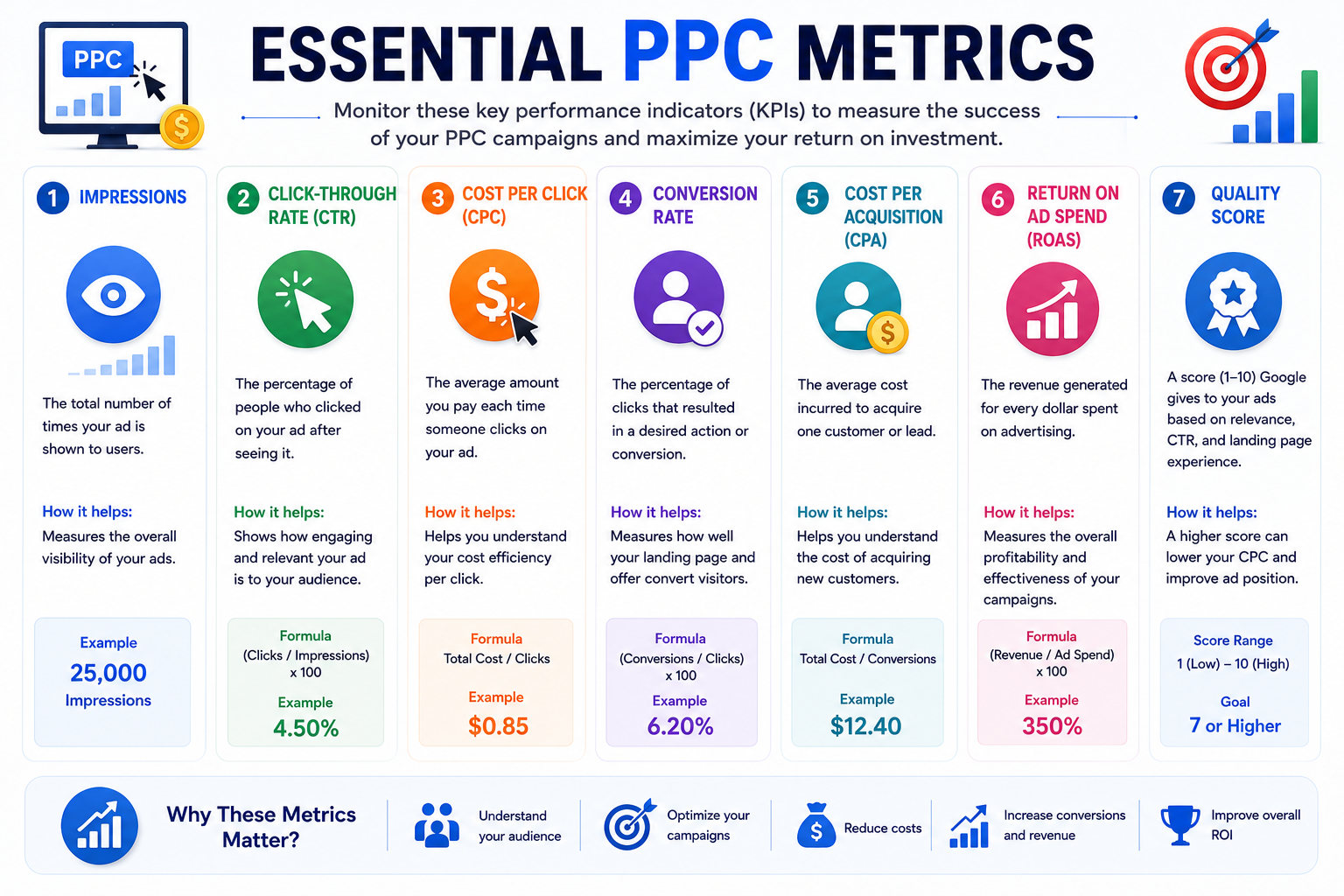
Monitor these key performance indicators (KPIs):
- Impressions
- Click-Through Rate (CTR)
- Cost Per Click (CPC)
- Conversion Rate
- Cost Per Acquisition (CPA)
- Return on Ad Spend (ROAS)
- Quality Score
Tips for Beginners
If you’re new to PPC:
- Start with a small budget
- Focus on one campaign at a time
- Use highly relevant keywords
- Optimize landing pages
- Review reports weekly
- Test different headlines and CTAs
- Scale successful campaigns gradually
Conclusion
Pay-Per-Click advertising is one of the most effective digital marketing strategies for driving targeted traffic and generating leads quickly. While it requires ongoing optimization and budget management, PPC offers measurable results, flexible targeting, and valuable insights into customer behavior. By combining PPC with SEO, content marketing, and social media, businesses can create a well-rounded digital marketing strategy that supports long-term growth.
Frequently Asked Questions (FAQs)
PPC (Pay-Per-Click) is an online advertising model where businesses pay only when someone clicks on their advertisement.
PPC delivers faster results, while SEO builds long-term organic traffic. Many businesses achieve the best outcomes by using both strategies together.
Start with a budget you’re comfortable testing, monitor results closely, and increase spending only on campaigns that perform well.
The ideal platform depends on your audience and goals. Search advertising is effective for capturing high-intent users, while social media platforms are useful for audience targeting and brand awareness.
PPC campaigns can begin generating traffic as soon as they are approved and launched, though optimizing for the best return may take several weeks of testing and refinement.
Quality Score is a rating based on factors such as ad relevance, expected click-through rate, and landing page experience. Higher scores can improve ad performance and reduce advertising costs.