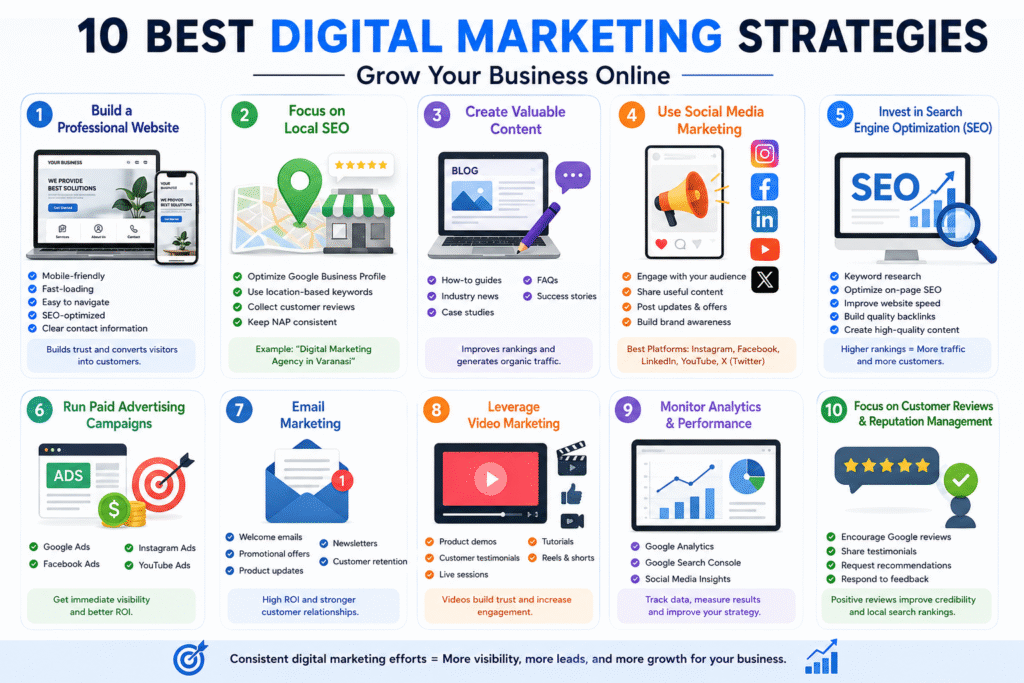
In today’s competitive market, having a strong digital presence is essential for small businesses. Whether you own a local shop, service-based company, or startup, the right digital marketing strategy can help attract more customers, increase brand awareness, and boost sales. Here are the most effective digital marketing strategies for small businesses in 2026.
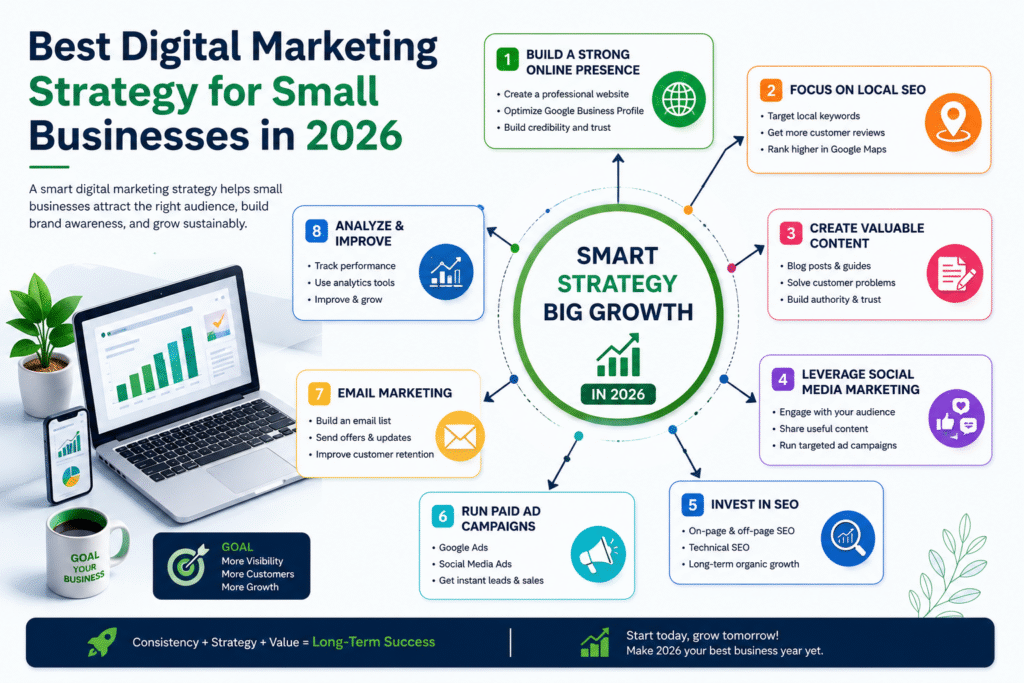
1. Build a Professional Website
Your website is the foundation of your online presence. It should be:
- Mobile-friendly
- Fast-loading
- Easy to navigate
- SEO-optimized
- Equipped with clear contact information
A professional website helps build trust and converts visitors into customers.
2. Focus on Local SEO
Local SEO helps your business appear in Google Search and Google Maps when people search for services nearby.
Key Local SEO Tips:
- Optimize your Google Business Profile.
- Use location-based keywords.
- Collect customer reviews.
- Keep your business information consistent across directories.
For example, if you run a digital marketing agency in Varanasi, target keywords such as “Digital Marketing Agency in Varanasi” and “SEO Services in Varanasi.”
3. Create Valuable Content
Content marketing helps attract potential customers and establish authority in your industry.
Content Ideas:
- How-to guides
- Industry news
- Case studies
- FAQs
- Customer success stories
Regular blog posts can improve search engine rankings and generate organic traffic.
4. Use Social Media Marketing
Social media platforms allow businesses to engage directly with their audience.
Best Platforms for Small Businesses:
- YouTube
- X (Twitter)
Share useful content, customer testimonials, behind-the-scenes updates, and promotional offers to increase engagement.
5. Invest in Search Engine Optimization (SEO)
SEO is one of the most cost-effective marketing strategies because it generates long-term traffic.
SEO Best Practices:
- Conduct keyword research.
- Optimize title tags and meta descriptions.
- Improve website speed.
- Build quality backlinks.
- Create high-quality content regularly.
Strong SEO can help your website rank higher on Google and attract targeted visitors.
6. Run Paid Advertising Campaigns
Paid advertising provides immediate visibility.
Popular Advertising Channels:
- Google Ads
- Facebook Ads
- Instagram Ads
- YouTube Ads
Start with a small budget and monitor performance to maximize return on investment (ROI).
7. Email Marketing
Email marketing remains one of the highest ROI digital marketing channels.
Email Campaign Ideas:
- Welcome emails
- Promotional offers
- Product updates
- Newsletters
- Customer retention campaigns
Personalized emails can significantly improve engagement and sales.
8. Leverage Video Marketing
Video content continues to dominate online engagement.
Effective Video Types:
- Product demonstrations
- Customer testimonials
- Educational tutorials
- Short-form reels
- Live sessions
Videos help businesses build trust and connect with their audience more effectively.
9. Monitor Analytics and Performance
Use tools like:
- Google Analytics
- Google Search Console
- Social Media Insights
Track website traffic, conversions, user behavior, and campaign performance to improve your marketing strategy.
10. Focus on Customer Reviews and Reputation Management
Online reviews influence purchasing decisions.
Encourage Customers To:
- Leave Google reviews
- Share testimonials
- Recommend your services
Positive reviews improve credibility and local search rankings.
Conclusion
The best digital marketing strategy for small businesses combines a professional website, SEO, local SEO, content marketing, social media engagement, paid advertising, and email marketing. By consistently implementing these strategies, small businesses can increase online visibility, attract more customers, and achieve sustainable growth in 2026.
Frequently Asked Questions (FAQs)
The best digital marketing strategy combines SEO, content marketing, social media marketing, email marketing, and paid advertising. A balanced approach helps businesses attract more customers and generate long-term growth.
SEO helps small businesses rank higher on Google, increase website traffic, and attract potential customers without spending heavily on advertising.
Social media platforms allow businesses to engage with customers, build brand awareness, showcase products or services, and generate leads through organic and paid campaigns.
Yes. Many digital marketing methods such as SEO, content marketing, and social media marketing can be implemented with a limited budget while delivering excellent results.
Paid advertising can generate results within days, while SEO and content marketing typically take 3–6 months to show significant improvements in traffic and rankings.
The best platform depends on your audience. Instagram and Facebook are ideal for local businesses, while LinkedIn works well for B2B companies and professional services.
Content marketing helps businesses educate customers, improve search engine rankings, build trust, and increase website traffic through valuable and informative content.
Local SEO helps businesses appear in local search results and Google Maps, making it easier for nearby customers to find their products or services.