
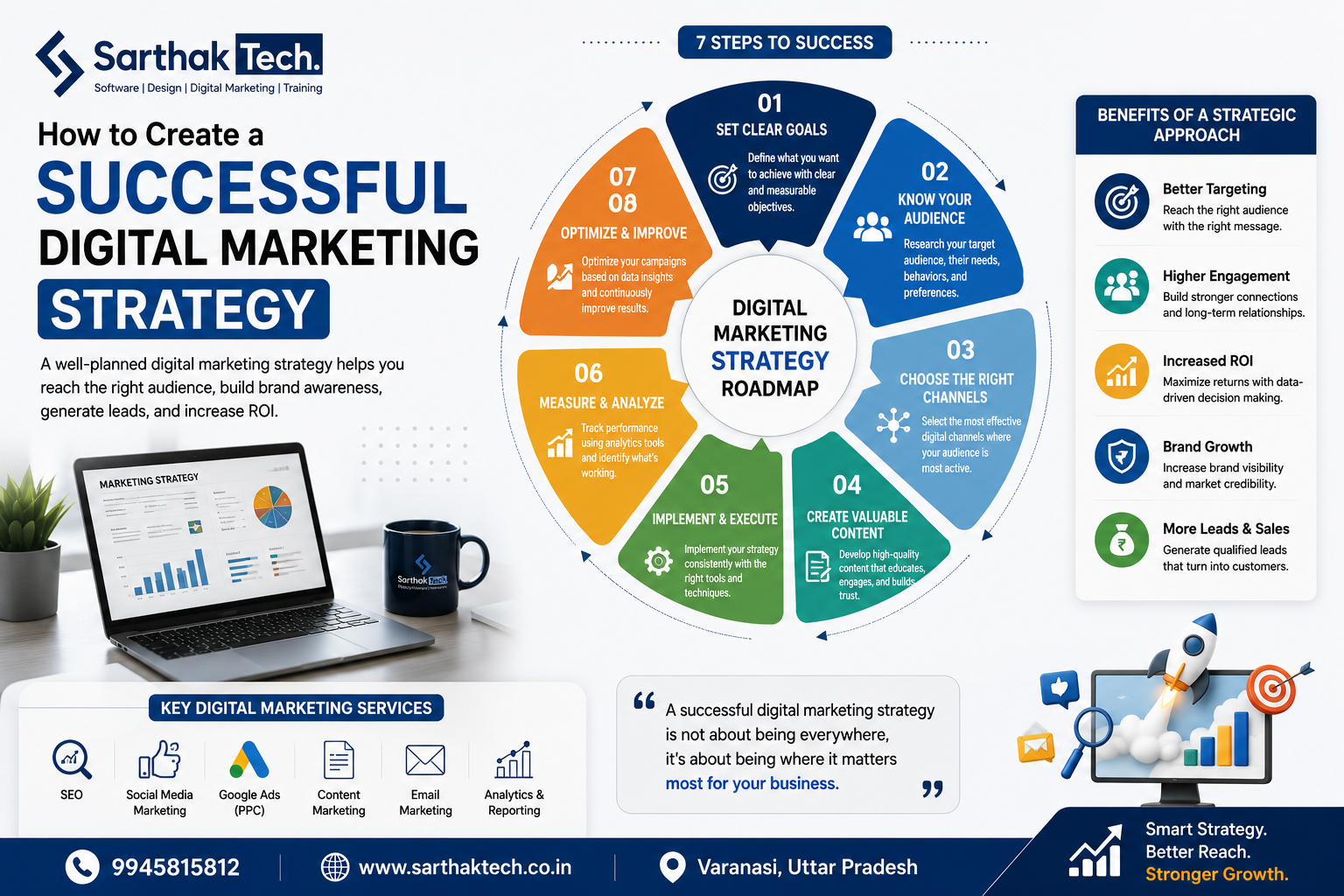
A successful digital marketing strategy is more than just posting on social media or running online ads. It’s a well-planned roadmap that helps businesses attract the right audience, generate quality leads, and increase sales. Whether you’re a startup, small business owner, or marketer, having a clear strategy ensures your marketing efforts deliver measurable results.
In this guide, you’ll learn how to build an effective digital marketing strategy step by step.
What Is a Digital Marketing Strategy?
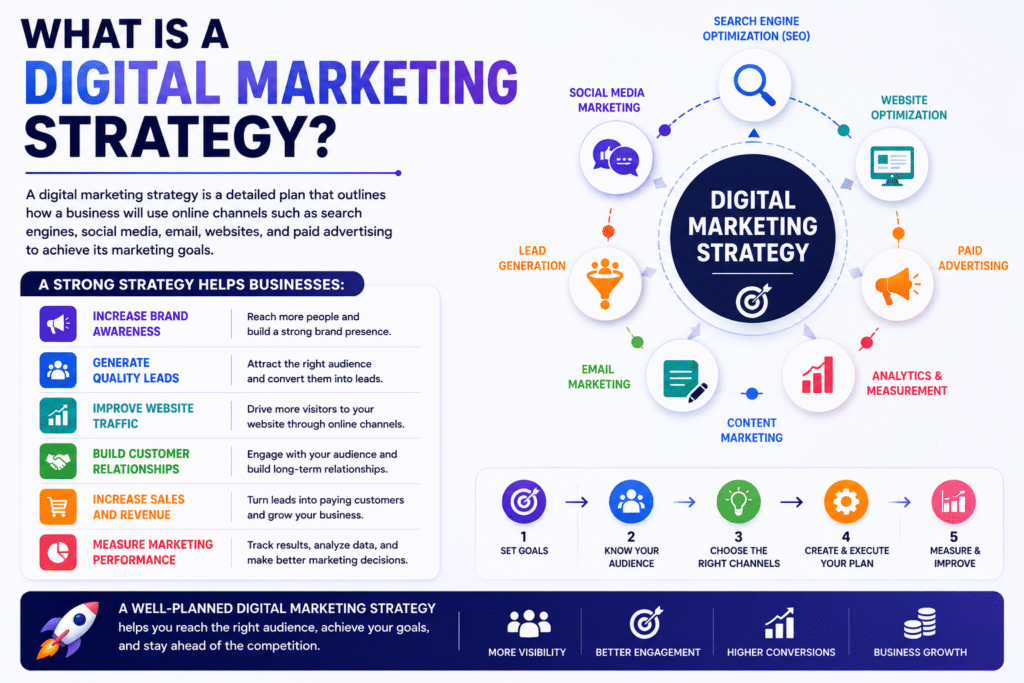
A digital marketing strategy is a detailed plan that outlines how a business will use online channels such as search engines, social media, email, websites, and paid advertising to achieve its marketing goals.
A strong strategy helps businesses:
- Increase brand awareness
- Generate quality leads
- Improve website traffic
- Build customer relationships
- Increase sales and revenue
- Measure marketing performance
Why Is a Digital Marketing Strategy Important?
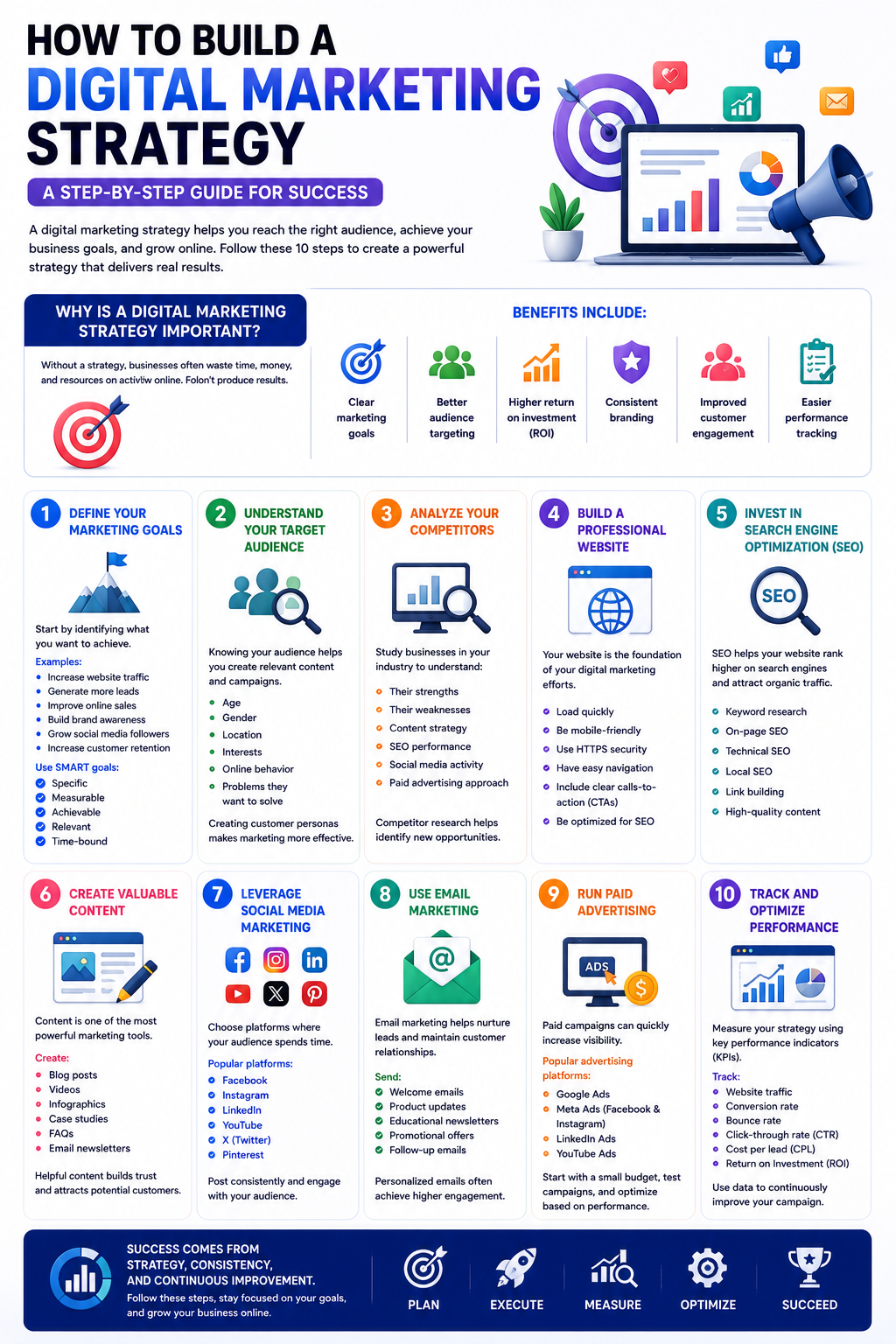
Without a strategy, businesses often waste time, money, and resources on activities that don’t produce results.
Benefits include:
- Clear marketing goals
- Better audience targeting
- Higher return on investment (ROI)
- Consistent branding
- Improved customer engagement
- Easier performance tracking
Step 1: Define Your Marketing Goals
Start by identifying what you want to achieve.
Examples include:
- Increase website traffic
- Generate more leads
- Improve online sales
- Build brand awareness
- Grow social media followers
- Increase customer retention
Use SMART goals:
- Specific
- Measurable
- Achievable
- Relevant
- Time-bound
Step 2: Understand Your Target Audience
Knowing your audience helps you create relevant content and campaigns.
Consider:
- Age
- Gender
- Location
- Interests
- Online behavior
- Problems they want to solve
Creating customer personas makes marketing more effective.
Step 3: Analyze Your Competitors
Study businesses in your industry to understand:
- Their strengths
- Their weaknesses
- Content strategy
- SEO performance
- Social media activity
- Paid advertising approach
Competitor research helps identify new opportunities.
Step 4: Build a Professional Website
Your website is the foundation of your digital marketing efforts.
A good website should:
- Load quickly
- Be mobile-friendly
- Use HTTPS security
- Have easy navigation
- Include clear calls-to-action (CTAs)
- Be optimized for SEO
Step 5: Invest in Search Engine Optimization (SEO)
SEO helps your website rank higher on search engines and attract organic traffic.
Focus on:
- Keyword research
- On-page SEO
- Technical SEO
- Local SEO
- Link building
- High-quality content
Step 6: Create Valuable Content
Content is one of the most powerful marketing tools.
Create:
- Blog posts
- Videos
- Infographics
- Case studies
- FAQs
- Email newsletters
Helpful content builds trust and attracts potential customers.
Step 7: Leverage Social Media Marketing
Choose platforms where your audience spends time.
Popular platforms:
- YouTube
- X (Twitter)
Post consistently and engage with your audience.
Step 8: Use Email Marketing
Email marketing helps nurture leads and maintain customer relationships.
Send:
- Welcome emails
- Product updates
- Educational newsletters
- Promotional offers
- Follow-up emails
Personalized emails often achieve higher engagement.
Step 9: Run Paid Advertising
Paid campaigns can quickly increase visibility.
Popular advertising platforms:
- Google Ads
- Meta Ads (Facebook & Instagram)
- LinkedIn Ads
- YouTube Ads
Start with a small budget, test campaigns, and optimize based on performance.
Step 10: Track and Optimize Performance
Measure your strategy using key performance indicators (KPIs).
Track:
- Website traffic
- Conversion rate
- Bounce rate
- Click-through rate (CTR)
- Cost per lead (CPL)
- Return on Investment (ROI)
Use data to continuously improve your campaigns.
Essential Digital Marketing Tools
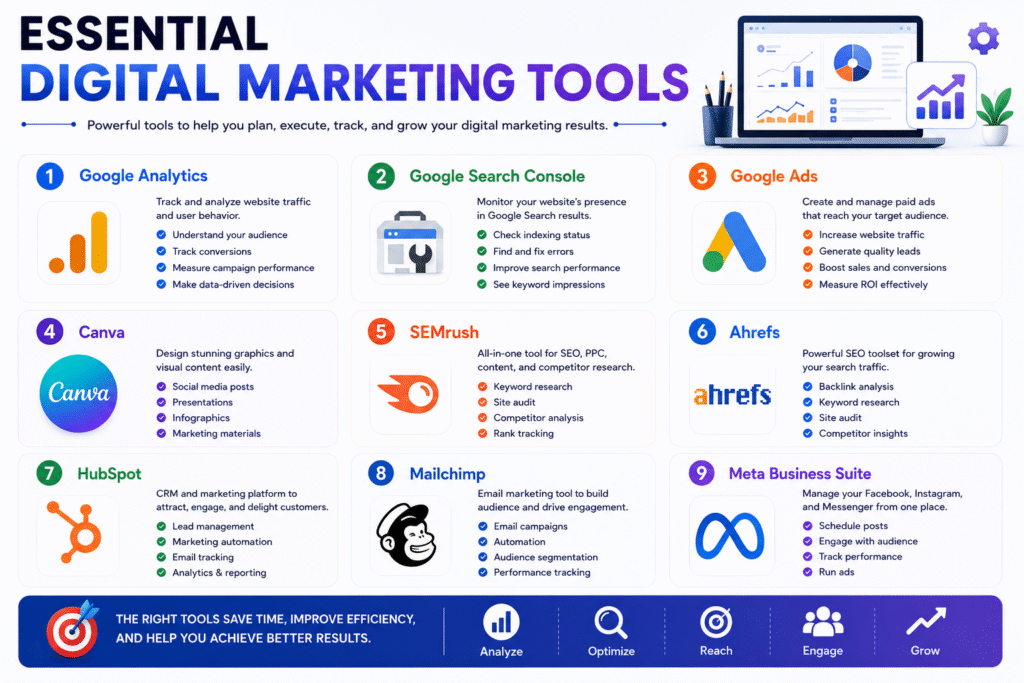
Helpful tools include:
- Google Analytics
- Google Search Console
- Google Ads
- Canva
- SEMrush
- Ahrefs
- HubSpot
- Mailchimp
- Meta Business Suite
Common Mistakes to Avoid
Avoid these common mistakes:
- Ignoring SEO
- Publishing inconsistent content
- Targeting the wrong audience
- Neglecting mobile optimization
- Failing to analyze campaign performance
- Using too many marketing channels at once
- Not having clear goals
Tips for Long-Term Success
- Focus on customer needs
- Create valuable, evergreen content
- Stay updated with industry trends
- Test and optimize regularly
- Build trust through transparency
- Invest in continuous learning
- Monitor competitors
Conclusion
A successful digital marketing strategy combines clear goals, audience research, SEO, valuable content, social media, email marketing, and performance analysis. Instead of trying every tactic at once, focus on building a strong foundation and improving your strategy over time. Consistency, creativity, and data-driven decisions are the keys to long-term online success.
Frequently Asked Questions (FAQs)
A digital marketing strategy is a plan that outlines how a business will use online channels to achieve specific marketing goals, such as increasing traffic, generating leads, or boosting sales.
It helps businesses focus their efforts, target the right audience, improve ROI, and measure campaign performance effectively.
Key components include:
Goal setting
Audience research
Website optimization
SEO
Content marketing
Social media marketing
Email marketing
Paid advertising
Performance tracking
Review your strategy at least every 3–6 months, or whenever there are significant changes in your business, audience, or market trends.
Yes. Even with a limited budget, small businesses can achieve excellent results by focusing on SEO, content marketing, local SEO, social media, and email marketing.
Monitor website traffic, conversion rate, click-through rate (CTR), bounce rate, customer acquisition cost (CAC), lead generation, and ROI to evaluate your strategy’s success.