In today’s digital world, almost every business has an online presence. Whether you’re shopping, searching for information, or connecting with brands, digital marketing plays a major role in your online experience. If you’re new to this field, this beginner-friendly guide will help you understand what digital marketing is, why it’s important, and how it can help businesses grow.
What Is Digital Marketing?
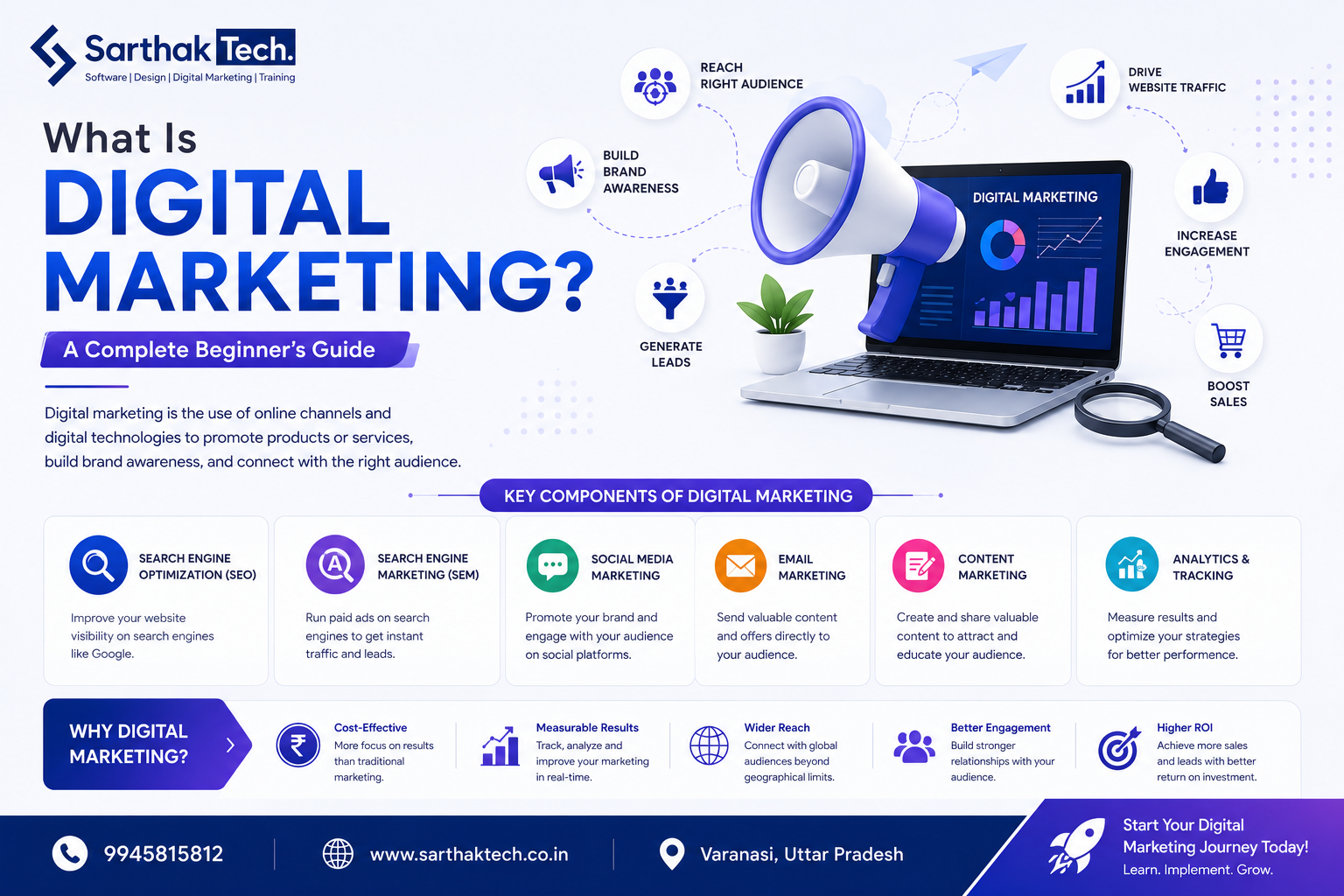
Digital marketing is the process of promoting products, services, or brands using digital channels such as search engines, websites, social media platforms, email, and mobile apps. Unlike traditional marketing methods like newspapers, TV, or radio, digital marketing allows businesses to reach their target audience online in a more measurable and cost-effective way.
Whether you’re a small business owner, freelancer, student, or entrepreneur, understanding digital marketing can help you grow your brand and reach more customers.
Why Is Digital Marketing Important?
Digital marketing has become essential because people spend a significant amount of time online. Businesses use digital platforms to:
- Reach a larger audience
- Increase brand awareness
- Generate quality leads
- Boost website traffic
- Improve customer engagement
- Increase sales and revenue
- Measure marketing performance in real time
Even local businesses can attract nearby customers through effective digital marketing strategies.
Types of Digital Marketing
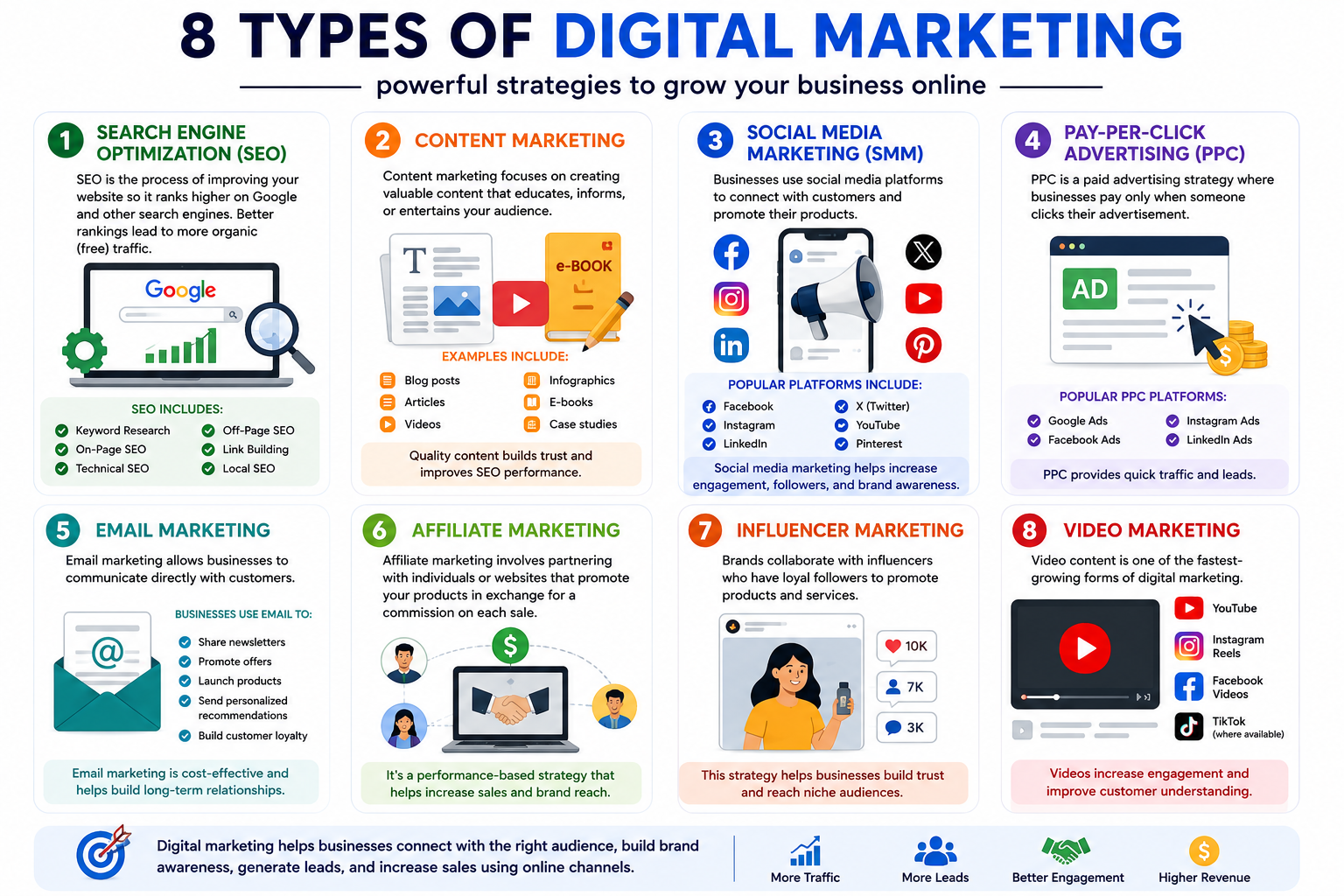
1. Search Engine Optimization (SEO)
SEO is the process of improving your website so it ranks higher on Google and other search engines. Better rankings lead to more organic (free) traffic.
SEO includes:
- Keyword Research
- On-Page SEO
- Technical SEO
- Off-Page SEO
- Link Building
- Local SEO
2. Content Marketing
Content marketing focuses on creating valuable content that educates, informs, or entertains your audience.
Examples include:
- Blog posts
- Articles
- Videos
- Infographics
- E-books
- Case studies
Quality content builds trust and improves SEO performance.
3. Social Media Marketing (SMM)
Businesses use social media platforms to connect with customers and promote their products.
Popular platforms include:
- X (Twitter)
- YouTube
Social media marketing helps increase engagement, followers, and brand awareness.
4. Pay-Per-Click Advertising (PPC)
PPC is a paid advertising strategy where businesses pay only when someone clicks their advertisement.
Popular PPC platforms:
- Google Ads
- Facebook Ads
- Instagram Ads
- LinkedIn Ads
PPC provides quick traffic and leads.
5. Email Marketing
Email marketing allows businesses to communicate directly with customers.
Businesses use email to:
- Share newsletters
- Promote offers
- Launch products
- Send personalized recommendations
- Build customer loyalty
6. Affiliate Marketing
Affiliate marketing involves partnering with individuals or websites that promote your products in exchange for a commission on each sale.
7. Influencer Marketing
Brands collaborate with influencers who have loyal followers to promote products and services.
This strategy helps businesses build trust and reach niche audiences.
8. Video Marketing
Video content is one of the fastest-growing forms of digital marketing.
Popular platforms include:
- YouTube
- Instagram Reels
- Facebook Videos
- TikTok (where available)
Videos increase engagement and improve customer understanding.
How Does Digital Marketing Work?
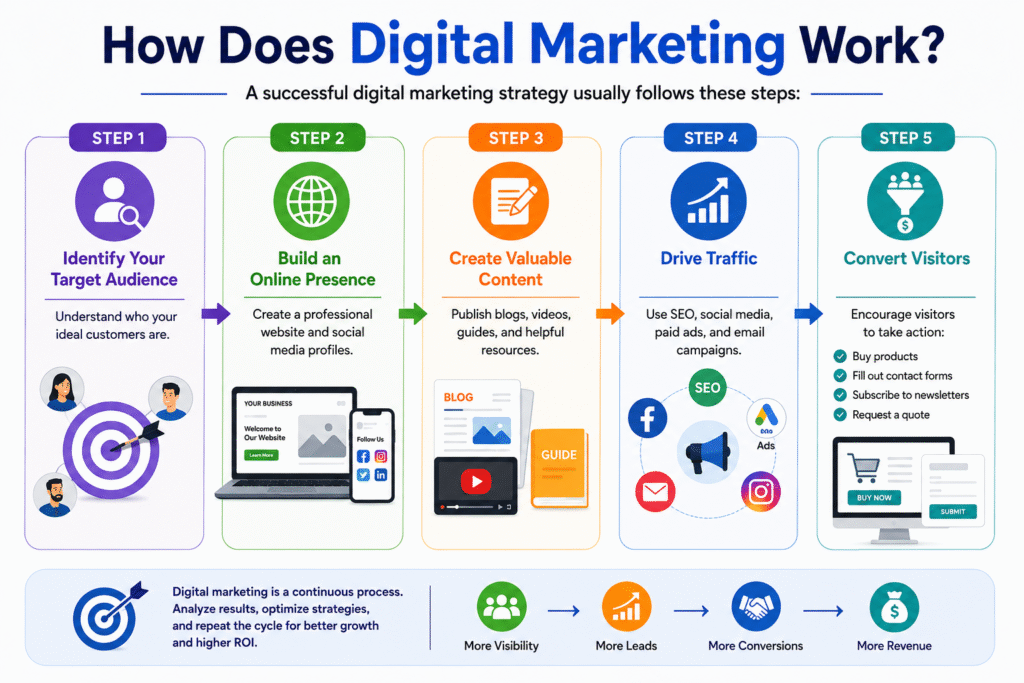
A successful digital marketing strategy usually follows these steps:
Step 1: Identify Your Target Audience
Understand who your ideal customers are.
Step 2: Build an Online Presence
Create a professional website and social media profiles.
Step 3: Create Valuable Content
Publish blogs, videos, guides, and helpful resources.
Step 4: Drive Traffic
Use SEO, social media, paid ads, and email campaigns.
Step 5: Convert Visitors
Encourage visitors to take action:
- Buy products
- Fill out contact forms
- Subscribe to newsletters
- Request a quote
Step 6: Analyze Results
Use analytics tools to improve your marketing campaigns.
Benefits of Digital Marketing
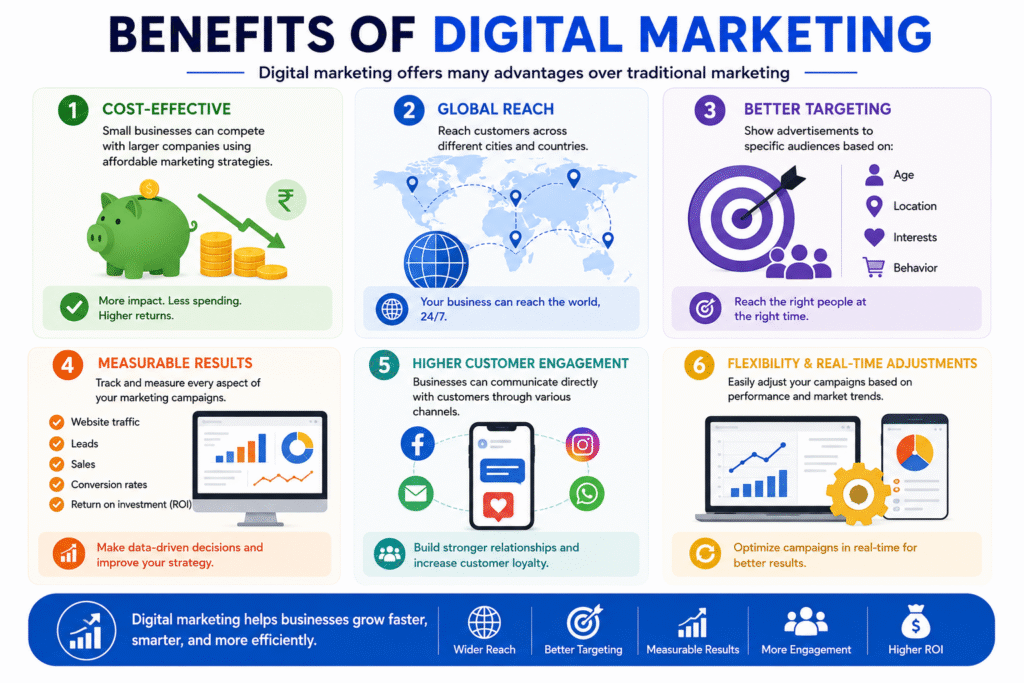
Digital marketing offers many advantages over traditional marketing.
Cost-Effective
Small businesses can compete with larger companies using affordable marketing strategies.
Global Reach
Reach customers across different cities and countries.
Better Targeting
Show advertisements to specific audiences based on:
- Age
- Location
- Interests
- Behavior
Measurable Results
Track:
- Website traffic
- Leads
- Sales
- Conversion rates
- Return on investment (ROI)
Higher Customer Engagement
Businesses can communicate directly with customers through comments, emails, and messages.
Essential Digital Marketing Tools
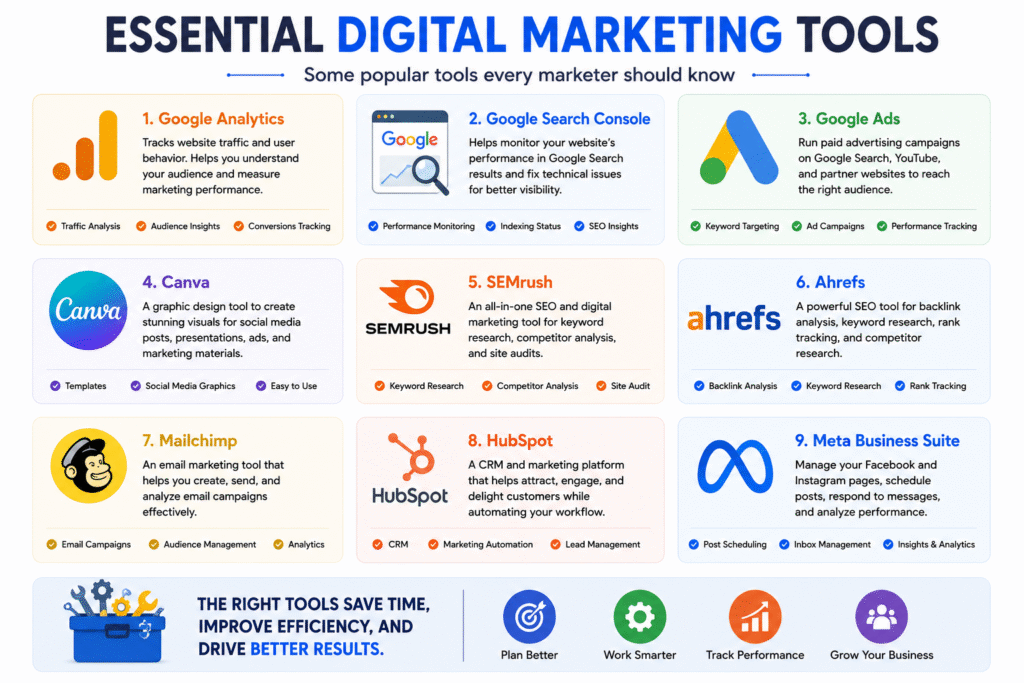
Some popular tools include:
- Google Analytics
- Google Search Console
- Google Ads
- Canva
- SEMrush
- Ahrefs
- Mailchimp
- HubSpot
- Meta Business Suite
Digital Marketing vs Traditional Marketing
| Digital Marketing | Traditional Marketing |
|---|---|
| Online platforms | TV, Radio, Newspaper |
| Lower cost | Higher cost |
| Easy performance tracking | Difficult to measure |
| Highly targeted | Broad audience |
| Real-time optimization | Limited flexibility |
Who Should Learn Digital Marketing?
Digital marketing is beneficial for:
- Students
- Small business owners
- Freelancers
- Startups
- Entrepreneurs
- Marketing professionals
- Content creators
- Bloggers
It is one of the most valuable skills in today’s job market.
Future of Digital Marketing
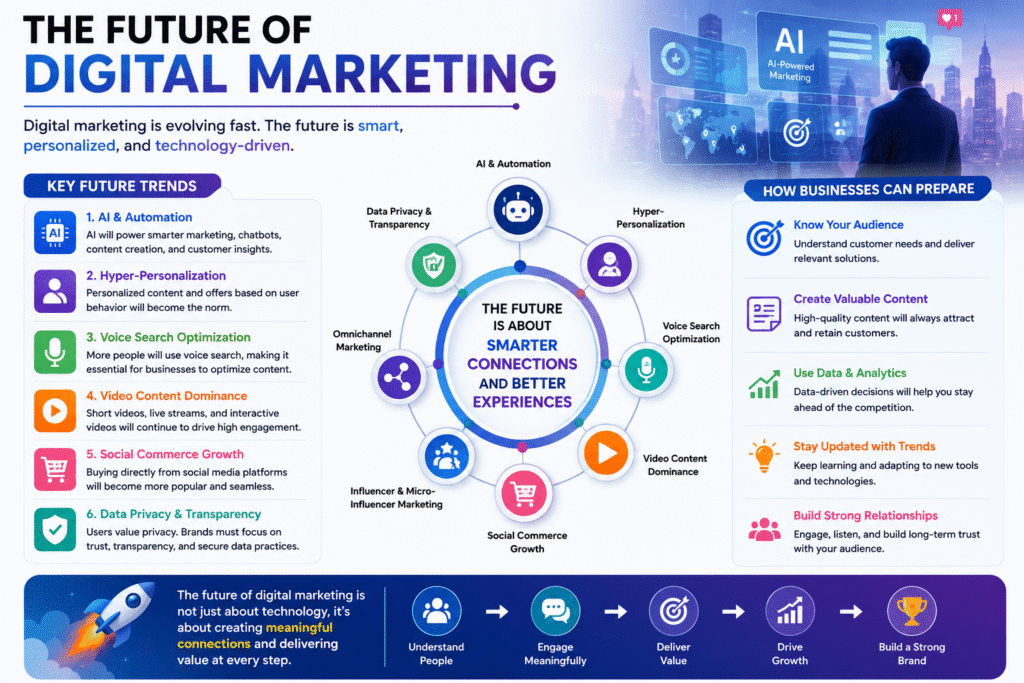
As technology continues to evolve, digital marketing is becoming more data-driven and personalized. Artificial intelligence, voice search, automation, and short-form video content are shaping the future of online marketing.
Businesses that adapt to these trends will have a competitive advantage.
Final Thoughts
Digital marketing has transformed how businesses connect with customers. Whether you want to grow a business, start a career, or promote your personal brand, learning digital marketing is a valuable investment. Start with the basics, focus on creating quality content, optimize your website for search engines, and continuously analyze your results to improve performance.
Frequently Asked Questions (FAQs)
Digital marketing is the promotion of products or services through online platforms like Google, social media, email, and websites.
Yes. Digital marketing continues to be one of the fastest-growing career fields with opportunities in SEO, content marketing, social media, PPC, email marketing, and analytics.
Some essential skills include:
SEO
Content writing
Social media management
Email marketing
Google Ads
Analytics
Communication
Creativity
Absolutely. Many beginners start with free online resources, practice on personal websites or blogs, and gradually build professional skills.
You can learn the basics in 2–3 months with consistent practice. Becoming proficient typically takes 6–12 months, depending on your learning pace and hands-on experience.
Digital marketing offers better targeting, measurable results, lower costs, and greater flexibility, making it a preferred choice for many businesses today.
The main types include:
Search Engine Optimization (SEO)
Content Marketing
Social Media Marketing
Pay-Per-Click (PPC) Advertising
Email Marketing
Affiliate Marketing
Influencer Marketing
Video Marketing
SEO helps improve your website’s visibility in search engine results, driving organic traffic, increasing brand awareness, and generating more leads without paying for ads.
Yes. Digital marketing is cost-effective and allows small businesses to compete with larger brands by reaching local and targeted audiences online.
Beginners should start with:
Learning SEO basics
Creating quality content
Building a simple website
Using social media consistently
Understanding Google Analytics and Search Console